Craig D. Rosenbaum | January 20, 2026 | New York Laws
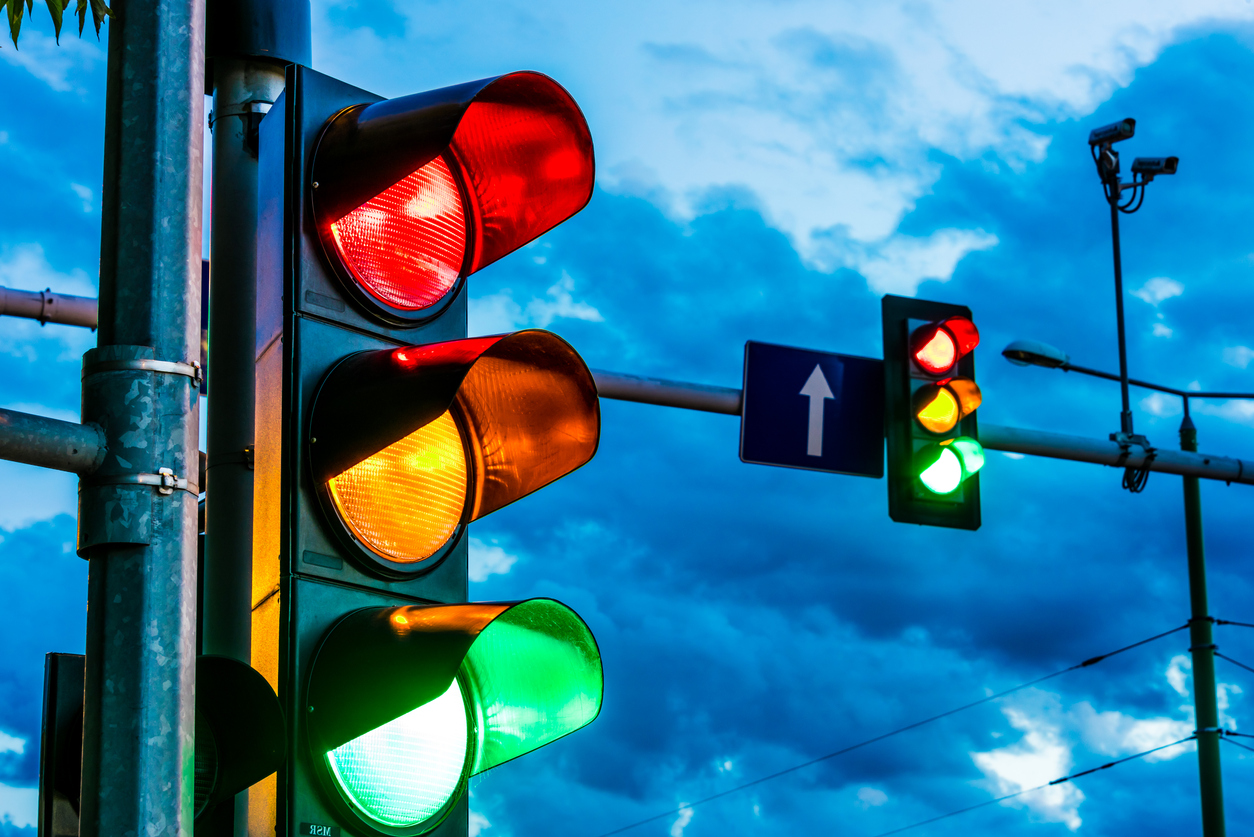
Power outages and signal failures can create confusion and danger at busy intersections. In such scenarios, drivers are instructed to treat the intersection as a four-way stop. This means every vehicle approaching the intersection must come to a complete halt, and the right-of-way is typically given to the first vehicle to arrive.
If multiple vehicles arrive simultaneously, the vehicle on the right has the right-of-way. Yielding to pedestrians and cyclists is also paramount.
This article explains New York’s rules for traffic lights that are out, offers tips for navigating dark intersections to safely avoid car accidents, and discusses legal issues that may arise after an outage in the Bronx.
Treating Dark Intersections as All‑Way Stops
Power outages, storms, and equipment failures sometimes leave traffic lights in the Bronx dark or flashing. Under New York law, drivers must treat a dark intersection as a four-way (or all-way) stop.
Steps drivers should take at a dark signal intersection include:
- Stop completely: Come to a full stop before the stop line or crosswalk.
- Look and listen: Check for other vehicles and pedestrians in all directions.
- Proceed cautiously: Take turns moving through the intersection and yield to the vehicle on your right.
Stopping and yielding in this manner reduces confusion and prevents crashes.
Responding to Flashing Lights
During outages or maintenance, signals may flash red or yellow.
The rules differ:
- Flashing red: This has the same meaning as a stop sign. Stop completely and proceed only when it is safe.
- Flashing yellow: Slow down, watch for cross traffic and pedestrians, and proceed with caution.
- Officer directions: When a police officer or traffic control worker directs traffic, follow their signals even if the lights are functioning. Police officers directing traffic supersede traditional right-of-way rules.
Knowing how to respond to these signals keeps traffic flowing and reduces risk.
Why the Four‑Way Stop Rule Exists
Treating dark intersections as all‑way stops may seem simple, but the rule has an important safety rationale. When signals fail, there is no automated assignment of right of way. Drivers approaching at high speeds could collide in the center of the crossroads.
Adopting a universal rule treating dark signals as a four-way stop can ensure all drivers know how to handle this situation. This system aims to reduce confusion, slow traffic, and encourage eye contact and communication among drivers. Because everyone follows the same pattern, accidents may become less likely.
Communicating with Other Drivers
At dark intersections, drivers cannot rely on electronic signals to communicate. Using simple gestures and signals helps everyone understand who will go next.
Helpful techniques include:
- Wave or hand signal: Motioning to another driver signals that they may proceed.
- Flash headlights: A brief flash of your headlights can indicate courtesy or alert others to your presence.
- Make eye contact: Looking at other drivers helps confirm intentions and builds understanding.
- Use the horn sparingly: A gentle beep can remind inattentive drivers to move, but avoid aggressive honking.
When everyone communicates respectfully, navigating dark intersections becomes much smoother.
Exceptions and Special Situations
Although the four‑way stop rule applies in most outages, there are exceptions and additional rules to consider:
- Emergency vehicles: Ambulances, fire trucks, and police cars responding to calls may proceed through the intersection after slowing; other drivers should yield to them.
- Railroad crossings: Always stop and look for trains, regardless of traffic signal status.
- Construction zones: Temporary signals, detours, or flaggers may be present; obey the posted signs and workers’ directions.
Recognising these special situations helps you apply the correct rules and stay safe.
Contact a Bronx Car Accident Lawyer at Rosenbaum Meier Personal Injury Lawyers for a Free Consultation Today
Power outages and storms are unpredictable, so being prepared is essential. By understanding why the four‑way stop rule exists, communicating clearly with other road users, following any special instructions, and reporting malfunctioning signals, you reduce your risk of crashes and legal problems. Ultimately, safe behavior at dark intersections protects you, your passengers, and your neighbors.
If you or a loved one were injured in a car accident at an intersection in the Bronx, Rosenbaum Meier Personal Injury Lawyers can help. Call us today to schedule a free consultation with our experienced Bronx car accident attorneys.
For more information, please contact Rosenbaum Meier Personal Injury Lawyers to schedule a free consultation. We have three convenient locations around Manhattan, NY, near you in New York City, The Bronx, and Brooklyn.
Rosenbaum Meier Personal Injury Lawyers – New York City Office
100 Wall St 24th Floor, New York, NY 10005
(212) 514-5007
Rosenbaum Meier Personal Injury Lawyers – Bronx Office
1578 Williamsbridge Rd suite 3b, Bronx, NY 10461
(212) 514-5007
(917) 905-2339
Rosenbaum Meier Personal Injury Lawyers – Brooklyn Office
32 Court St #704, Brooklyn, NY 11201
(212) 514-5007
(917) 920-7332
About the Author